

The dog is dry. The coat looks clean. Yet the smell reaches the couch before the dog does. The reflex is to grab the strongest-smelling spray in the house. That is usually the wrong first move.
A sensible between-bath reset works in this order: find the source, clean or dry what actually needs attention, groom the coat, and add fragrance only if the coat is otherwise clean and comfortable. Brushing, clean bedding and gear, targeted spot cleaning, and thorough drying do the practical work. A dog-specific coat mist can add a pleasant finish; it is not a bath, shampoo, or answer to a new or persistent odor.
Use the Source–Surface–Scent check
Before you reach for anything scented, ask three questions.
- Source: Where is the smell actually coming from—the body coat, a damp collar, bedding, paws, ears, or mouth?
- Surface: What needs attention—loose coat, visible dirt, a damp patch, muddy paws, or washable gear?
- Scent: Once the first two are handled, would a light fragrance make a clean, dry coat nicer to live with?
That order matters because “my dog smells” is not one problem. Sometimes the dog needs a brush. Sometimes the harness is the culprit. Sometimes there is a real mess to clean. And sometimes a changed odor is a care signal that should not be covered up.
Know when to stop the freshness routine
Skip fragrance and contact your veterinarian when the odor is new, unusually strong, keeps returning, or comes with itching, frequent licking, redness, hair loss, sores, pain, head shaking, or ear discharge. Veterinary references list body odor alongside skin changes and identify foul ear odor with redness, scratching, swelling, or discharge as signs that need evaluation.
This is not a request to diagnose the source at home. It is a reminder that a finishing spray should never be used to hide a change your dog is showing you.
1. Brush before you add anything
Run your hands over the coat first. If the skin looks comfortable and the issue is ordinary coat smell, brush with a tool suited to your dog’s coat. Brushing can lift loose hair, dirt, and debris before you decide whether any other step is needed.
Keep the session short and watch the dog, not the clock. If they freeze, pull away, or show stress, pause. The goal is a workable routine, not a wrestling match disguised as grooming.
2. Reset the things that touch the coat
A clean coat can pick up yesterday’s smell from a bed cover, favorite blanket, collar, harness, or car liner. Check the care label, wash what is washable, and let it dry fully before it goes back into use. There is no honest universal schedule here: a dog who swims, hikes, drools on a blanket, or lives in a rainy climate will create a different laundry rhythm from a short-coated indoor dog.
3. Spot-clean the mess you can see
If the problem is a muddy belly, dirty paws, or one grubby patch, deal with that patch. Use a grooming wipe, waterless cleanser, or other spot-cleaning product made for dogs, and follow its label. Do not substitute human shampoo or human perfume. If a dog has a known skin condition or the skin looks irritated, ask your veterinarian before adding a new topical product.
A wipe-down is for a small, ordinary mess. It is not a way to postpone a needed bath indefinitely or manage a health problem without care.
4. Dry what is damp
Rain, swimming, and a half-dry undercoat can turn a routine refresh into a damp-dog loop. Towel the coat and give dense areas enough time to dry. Check the collar and harness too; putting wet gear back on a dry dog defeats the point.
If your dog has a thick or double coat, matting, or a coat you cannot dry comfortably at home, a professional groomer can help you choose the right process.
5. Use fragrance as the finish, not the fix
Once the coat is clean enough for the day, fully dry, and showing no warning signs, a dog-specific fragrance can be the final touch. The goal is not to overpower the room. It is to add a pleasant, close-to-the-coat scent after the practical work is finished.
Follow the product’s instructions, avoid the eyes and face, and stop if irritation occurs. More fragrance is not more grooming.
Where Pupadour fits
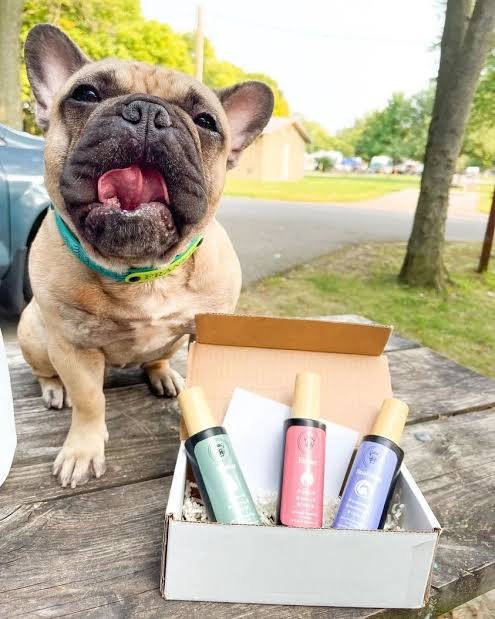
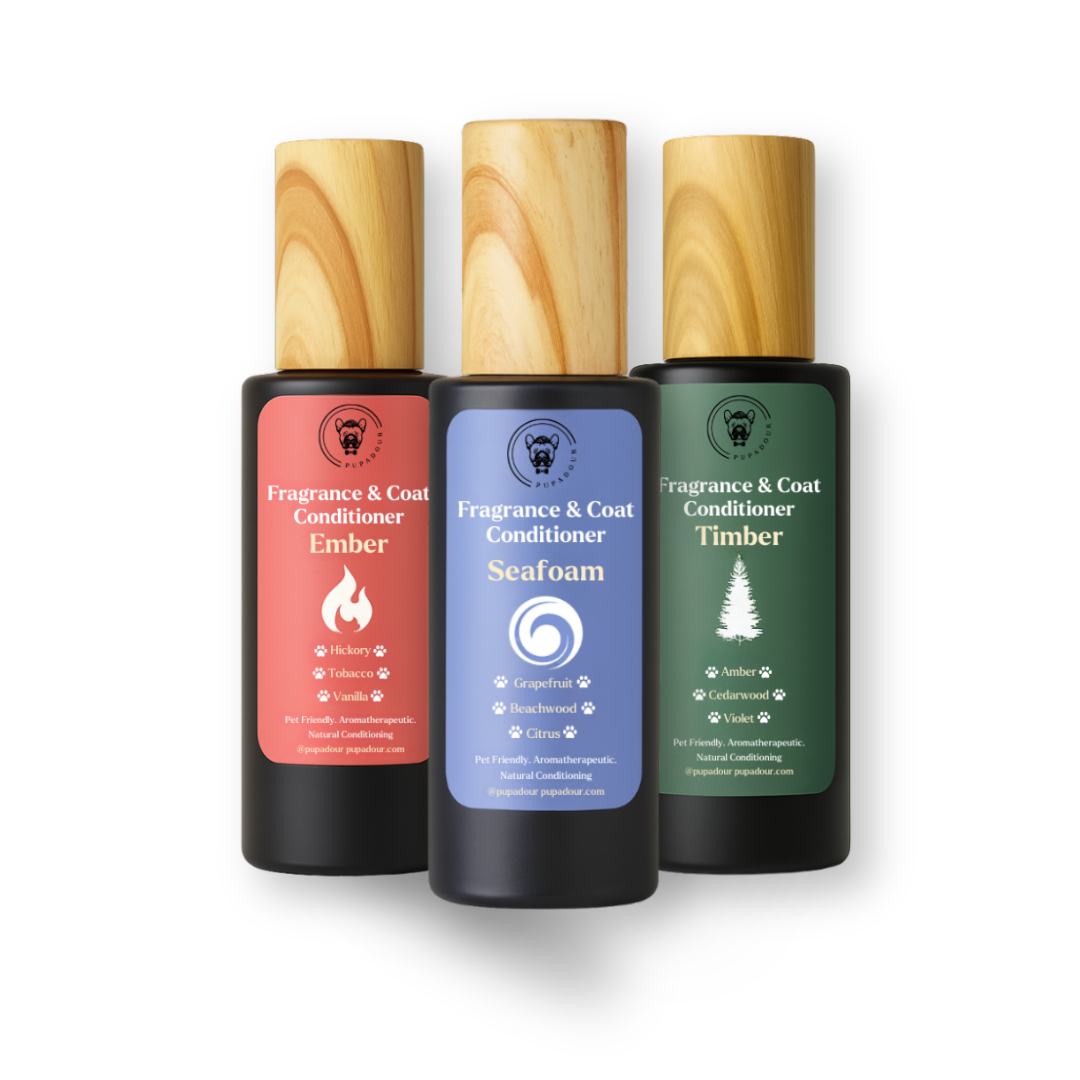
Pupadour Signature is a glass-bottle between-bath fragrance and lightweight coat conditioner. On a clean, dry, comfortable coat: shake well, lightly spritz the body coat from a comfortable distance, avoid the face, then rub or brush it through. It does not replace bathing or regular grooming.
If fragrance is the logical last step for your dog, explore the Signature coat mists or use the scent quiz to choose among Seafoam, Timber, and Ember.
The saveable between-bath checklist
- Is the odor new, persistent, or paired with skin, ear, or behavior changes? Stop and ask your veterinarian.
- Is the coat or gear damp? Dry it.
- Is there visible debris or loose coat? Brush with the right tool.
- Is one area actually dirty? Spot-clean it with a dog-appropriate product.
- Do bedding, blankets, collars, or harnesses carry the smell? Reset those surfaces.
- Is the coat clean enough, dry, and comfortable? Fragrance is optional—and last.
Fresh does not mean “the strongest smell won.” It means the obvious little problems were handled in the right order, and nothing important was covered up.
Sources
- American Kennel Club — bathing, brushing and coat care
- American Kennel Club — drying your dog
- PetMD — bathing and coat-care guidance
- Cornell Riney Canine Health Center — cooperative grooming
- MSD Veterinary Manual — ear-odor warning signs
- VCA — skin and coat guidance
- Pupadour — FAQ and application instructions