

By Pupadour
Quick answer: There is no single cologne every groomer uses. Salons choose finishing fragrances based on scent strength, coat feel, application, client preference, and whether fragrance is appropriate for that dog. A finishing spray belongs at the end of a clean, dry grooming routine; it does not replace bathing or address the cause of persistent odor.
That answer is less dramatic than a ranked list, but it is more useful. Professional groomers work with different dogs, coats, households, salon policies, and client requests. Some finish a groom with fragrance. Some keep several scent profiles on hand. Some skip fragrance entirely when a dog or client is sensitive to it.
The better question is not “Which bottle do all groomers use?” It is “What makes a finishing spray appropriate for this dog, this coat, and this household?”
What kinds of dog cologne appear in professional grooming?
Professional-grooming catalogs show a category with plenty of variety rather than one universal standard. Chris Christensen sells SmartScents grooming colognes, Hydra directs groomers to apply its cologne after drying, and Groomer’s Choice positions Bark2Basics Salon Scents as a finishing touch after a groom or between baths. Those are examples of the category—not proof that every groomer uses the same brand, formula, or scent.
The common thread is the job the product performs. A dog cologne or fragrance finishing spray adds a final scent after grooming. Some formulas also have a cosmetic coat-finishing function, such as conditioning. That is different from a detangling spray, a styling spray, a shampoo, or a veterinary product. Read the product’s stated purpose and directions instead of assuming every spray is interchangeable.
Why fragrance comes at the end of the groom
A finishing fragrance is exactly that: a finish. Grooming educators and professional product directions consistently place cologne after the bathing, rinsing, drying, and coat-finishing work is complete. Applied at that point, fragrance can complement a clean coat without being mistaken for the cleaning step itself.
Cologne should not be used to cover an odor that is persistent, unusual, or returning quickly. Odor can sometimes accompany a skin, ear, dental, or other health concern. If something smells wrong rather than simply “dog-like,” pause the fragrance and ask a veterinarian what is causing it.
What groomers and dog owners should compare
1. The product’s intended use
Choose a product labeled and directed for dogs, then follow that label. Human perfume is not a shortcut: dogs experience scent differently from us, and products made for people are not written with canine application in mind.
2. Scent character and strength
A bright, clean profile creates a different finish than a woody or warm gourmand scent. Strength matters too. A scent that feels light to one person may be distracting to a dog or too strong for a fragrance-sensitive household. Start with less; adding another light mist is easier than undoing an overapplication.
3. Spray pattern and directions
Look for instructions that make controlled application easy: shake if directed, mist from the recommended distance, avoid the face, and distribute the product through the coat if the label calls for it. A consistent sprayer helps the user apply lightly instead of soaking one area.
4. The cosmetic coat finish
Some dog colognes are fragrance-only. Others combine fragrance with a cosmetic conditioning step. Decide whether you want scent alone or a product intended to help leave the coat feeling softer and more touchable. Keep that expectation cosmetic; a finishing spray is not a treatment for a skin or coat condition.
5. The dog and the household
Preference is part of the decision. The groomer may like one finish, the dog’s person may prefer another, and the dog may be more comfortable with little or no added fragrance. A good finishing choice respects all three.
How to apply dog cologne carefully
- Start with a clean, dry coat. Fragrance is a finishing step, not a substitute for bathing.
- Read the label. Different formulas specify different distances, amounts, and ways to distribute the product.
- Avoid the face. Do not spray into the eyes, nose, mouth, or ears. When a product’s directions allow, apply a light mist over the body from a comfortable distance.
- Use a light hand. More product does not automatically create a better finish. Stop if the dog shows discomfort or irritation.
- Distribute and dry as directed. For Pupadour, rub or brush the light mist through the fur, then let the coat dry before close contact.
When to skip fragrance
A fragrance-free finish may be the better choice when:
- the dog is showing discomfort around fragrance, such as repeated sneezing, face rubbing, or trying to move away;
- the skin looks irritated or the dog is already uncomfortable;
- the odor is persistent, unusual, or unexplained and should be evaluated rather than covered;
- the dog’s person requests no fragrance or someone in the household is fragrance-sensitive; or
- a veterinarian has advised avoiding fragranced products for that dog.
If a reaction occurs after application, stop using the product and follow veterinary guidance. A pleasant scent is optional; the dog’s comfort is not.
Where Pupadour fits
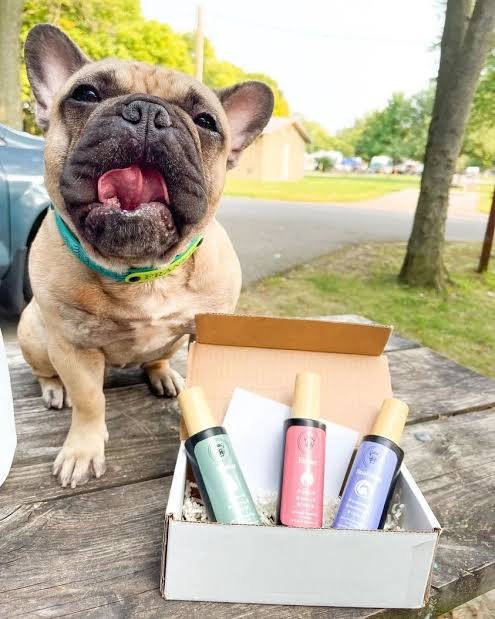
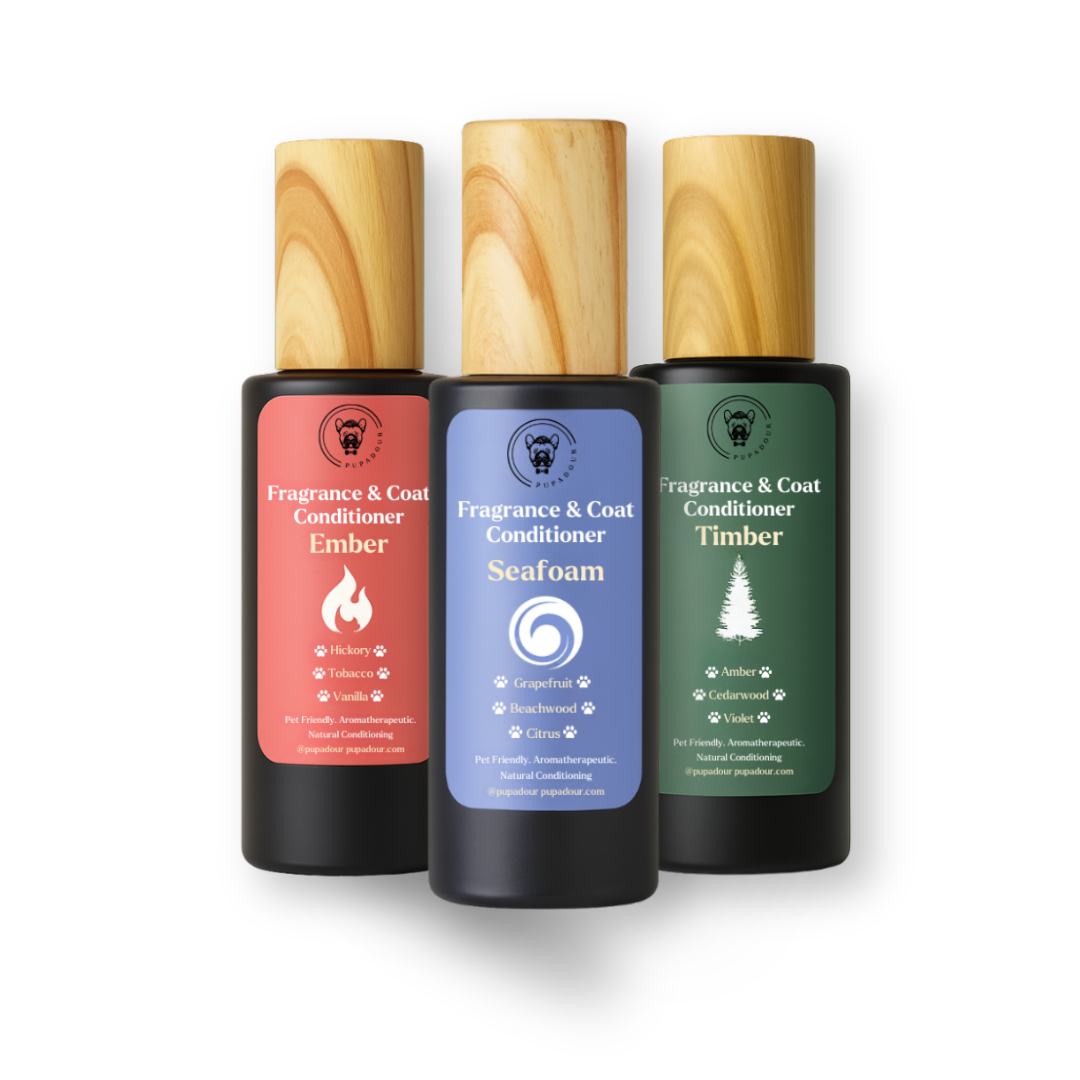
Pupadour Signature products are fragrance + coat conditioners for cosmetic use between baths or as a finishing step after grooming. They are designed to add fragrance while helping leave the coat soft and touchable. We do not claim there is one scent every groomer prefers, and we do not position fragrance as a replacement for cleaning or veterinary care.
The current Signature scent profiles are:
- Seafoam — a crisp coastal linen breeze.
- Timber — cedar, eucalyptus, and lemon leaf.
- Ember — a smoky toasted caramel scent.
To use Pupadour, shake well, lightly spritz the coat from a comfortable distance, avoid the face, then rub or brush it through. Let the coat dry before close contact.
Explore the Pupadour Signature collection or take the scent quiz to narrow the choice by fragrance profile.
Frequently asked questions
Do all groomers use dog cologne?
No. Practices vary by salon, groomer, dog, and client preference. Some groomers offer fragrance as an optional finishing step; others use it selectively or provide a fragrance-free finish.
Can dog cologne replace a bath?
No. Cologne adds fragrance; it does not clean the coat or resolve the cause of persistent odor. Use it as a finishing step or between-bath cosmetic product according to its directions.
Can I use human perfume on my dog?
Do not treat human perfume as interchangeable with a product labeled for dogs. Use a dog-directed product, follow its label, apply lightly, and avoid the face.
How often should I use dog cologne?
There is no universal schedule. Follow the product directions and use the smallest amount that creates the finish you want. Skip it if the dog appears uncomfortable or irritated.
Sources and methodology
This guide separates three kinds of evidence: veterinary safety guidance, professional-grooming practice, and manufacturer directions. Product pages below are used only to show how current professional-channel colognes are positioned and applied; they are not independent safety evidence or proof of universal groomer preference.
- American Kennel Club: Pet Perfumes and Deodorizing Sprays — veterinarian-sourced cautions on scent sensitivity, light application, avoiding the face, and not masking unexplained odor.
- American Kennel Club: How to Groom a Dog at Home — general grooming guidance, including avoiding non-dog-directed human fragrances.
- ABK Grooming: How to Use Dog Perfume and Cologne Safely — an individual certified master groomer’s framing of fragrance as an optional final step, not a bath replacement.
- Chris Christensen SmartScents — current professional-channel example and manufacturer application directions.
- Hydra Forever Velvety Cologne — current professional-channel example that directs application after drying.
- Bark2Basics Salon Scents — current professional-channel example positioned as a finishing touch after grooming or between baths.